


Niche Edits in 2026: A Complete Guide to Contextual Backlinks

Erika
Head of Link Operations
In a landscape where search algorithms have grown more sophisticated and AI-driven results are reshaping how users discover information, one link building method has quietly held its ground: niche edits.
While trends come and go, niche edits remain one of the most efficient ways to earn powerful, contextual backlinks. They place your link inside content that search engines have already evaluated, indexed, and in many cases ranked. That head start matters.
But efficiency is only half the story. What truly sets niche edits apart is relevance. Search engines do not just measure how many links point to your site; they assess what those links say about your site. When a backlink lives inside a paragraph that already discusses your topic, it carries a different kind of weight than a link dropped into a sidebar or footer. Context and relevance are what drive real ranking authority, and niche edits deliver both.
This guide covers everything you need to know about niche edits in 2026: what they are, how they compare to other tactics, what separates a quality placement from a risky one, and how they factor into AI visibility.
What Are Niche Edits?
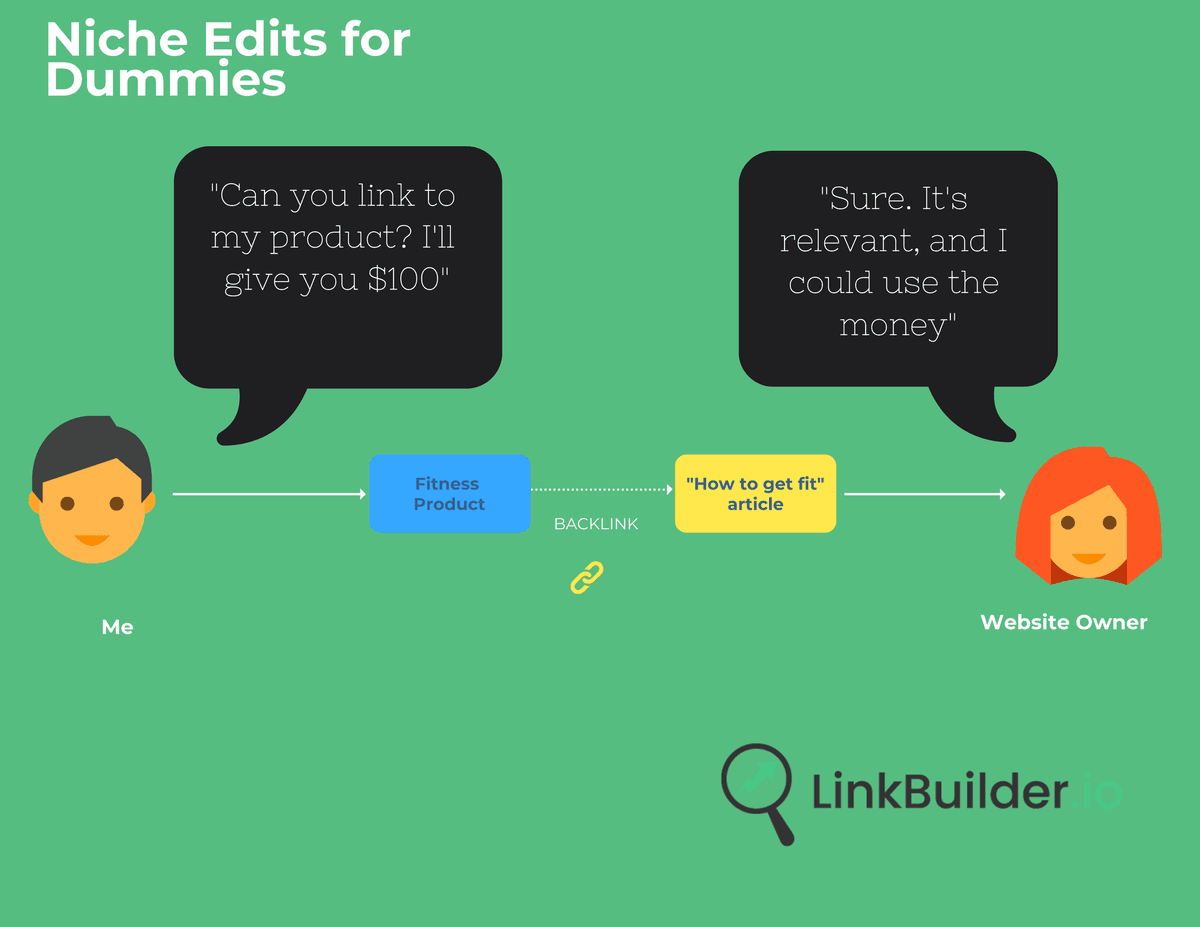
A niche edit is a backlink inserted into an existing, published piece of content on a third-party website. Rather than creating a new article to host your link, niche edits work by adding your link (along with a sentence or two of supporting context) into a post that has already been live for months or years.
The mechanism is straightforward. A site owner or editor identifies a relevant passage in an existing article and weaves in a contextual reference to your brand or resource. The result is a backlink that lives inside established content with real editorial history.
This is why niche edit backlinks tend to carry strong ranking power. Search engines have already crawled and evaluated the host page. Its authority is established. Its relevance signals are baked in. When your link is added to that environment, it benefits from all of that existing equity rather than starting from scratch the way a brand-new guest post would.
The key distinction from other link types is that niche edits are contextual by nature. The link appears inside body copy, surrounded by topically relevant language, which reinforces the semantic connection between the linking page and your target URL. You can read more about why this matters in our guide to contextual link building.
Building relationships with site owners is crucial if you want to achieve a niche edit. Genuine connections with webmasters can open doors to earning valuable links within relevant content, although this process often requires patience.
Sometimes, a financial incentive might be necessary to persuade a website owner to edit their content and incorporate your link. This renders it a paid link.
According to the guidelines in Google Search Essentials, paying for links is not permitted, so you’ll need to be careful when offering to pay for niche edits:

The example below is a resource page by marketing automation platform Hubspot. Let’s say one of the resources listed reached out to Hubspot to ask that they be included on its list. This would be considered a niche edit:

How Niche Edits Compare to Guest Posts
Both niche edits and guest posts are legitimate, widely-used link building methods. They serve different purposes and carry different tradeoffs.
Guest posts involve creating entirely new content for a third-party site. The upside is control: you shape the narrative, choose the anchor text, and build the surrounding context from the ground up. The downside is time and effort. Quality guest posts require original research, careful writing, editorial review, and publication turnaround that can stretch from days to weeks.
Niche edits move faster. Because the content already exists, the placement process focuses on finding the right existing article and negotiating a contextual insertion. For campaigns with tight timelines or a need to scale, this speed advantage is significant.
Here is how they stack up across key dimensions:
Factor | Niche Edits | Guest Posts |
Speed of placement | Fast | Slower |
Editorial effort | Lower | Higher |
Contextual control | Moderate | High |
Existing page authority | Yes, inherited | No, built over time |
Scalability | High | Moderate |
When to use each: Guest posts work well when you want to establish thought leadership, introduce a new topic area, or control the full context of a placement. Niche edits are the better choice when you need authoritative placements quickly, want to reinforce existing topical relevance, or are targeting pages that already rank for your keywords.
The strongest link building strategies use both. Niche edits and guest posts complement each other rather than compete.
What Makes a High-Quality Niche Edit
Not all niche edits are created equal. The difference between a placement that moves rankings and one that sits dormant (or worse, triggers a penalty) comes down to a handful of quality signals.

Aged content with real traffic. The best niche edit placements go into articles that have been live long enough to accumulate crawl history, backlinks of their own, and organic traffic. A page published three years ago that still draws several hundred visitors a month is a very different asset from a thinly-written post published last week.
Topical relevance. The host page should discuss subject matter that is genuinely connected to your target URL. If your business operates in fintech and your link appears in a home improvement article, that disconnect is visible to search engines and offers minimal ranking benefit. This is the core principle behind relevant backlinks and why relevance is non-negotiable.
Clean link profiles. Before accepting a placement, it is worth examining who else is linking to the host page and who the host site links out to. A site that sells links indiscriminately or sits inside a network of low-quality domains is a liability, not an asset. Reviewing a site's backlink profile before committing to a placement is essential due diligence.
Editorial oversight and quality assurance. The best niche edits happen on sites where real editorial standards exist: where someone reads the content, maintains the site, and would reject a placement that felt forced or spammy. Editorial oversight is the signal that separates authentic placements from manipulated ones. It is also what makes a link trustworthy in the eyes of search engines.
Risks of Low-Quality Niche Edits
Niche edits, like any link building tactic, carry risk when executed carelessly. Understanding where those risks come from helps you avoid them.

Spam domains and private blog networks (PBNs). Some operators sell niche edits on sites that exist solely to sell links: thin content, low traffic, no real audience. These domains may show acceptable Domain Rating numbers on the surface while being entirely artificial underneath. Google's spam systems have grown adept at identifying and devaluing these networks. Our breakdown of PBN backlinks explains exactly why these carry such serious long-term risk.
Manipulated anchor text. Exact-match anchor text used at scale is one of the clearest signals of an unnatural link profile. If every niche edit pointing to your site uses the same keyword-heavy anchor, that pattern raises flags. Natural link profiles contain variation: branded anchors, partial matches, generic phrases, and bare URLs alongside occasional exact-match terms. Our guide to anchor text optimization covers this in depth.
Automated link injection. Some low-end services use tools to insert links into content management systems without any human editorial involvement. These placements lack the authentic contextual signals that make niche edits valuable and are among the highest-risk approaches in the market.
Signals that trigger penalties. Rapid accumulation of links from low-quality domains, unnatural anchor text distributions, and links from sites with no organic traffic are all patterns that can trigger algorithmic or manual penalties. Understanding what constitutes an unnatural link is critical before scaling any placement campaign. The safest approach is always quality over volume.
How Niche Edits Improve SEO
When done correctly, niche edits contribute to SEO performance across several dimensions.
Reinforcing topical relevance. Every contextual link acts as a signal that your target page belongs in a specific topic space. When multiple authoritative sources within your niche link to the same page, search engines build a clearer picture of what that page is about and who it should serve. This is a central part of building high authority backlinks that actually move the needle.
Passing authority to key landing pages. Niche edit backlinks allow you to direct link equity precisely where it is needed most: to conversion pages, product pages, or cornerstone content that might struggle to attract natural links on its own. This is one of the clearest use cases in any link building ROI analysis.
Faster indexing and improved contextual clarity. When a well-crawled, authoritative page links to your content, it creates a pathway for search engine crawlers to reach and evaluate your page more quickly. The surrounding context of the insertion also gives algorithms additional signals about what your page covers, which can accelerate ranking for related keywords.
How to Choose Publishers for Niche Edits
Publisher selection is where most niche edit campaigns succeed or fail. The temptation to chase high Domain Rating numbers is understandable, but DR alone is a poor proxy for placement quality. Here is what actually matters.
1) Relevance over raw DR
A DR 45 site that covers your exact niche will almost always outperform a DR 70 site with no topical connection to your content. Domain authority checkers are useful tools, but they should be one input among many, not the deciding factor.
Let’s say you’re a social media marketing news site, and your DR is around 80. A good site to target for a niche edit would be the social media management tool Buffer, as their DR is 91:

On the other hand, if your social media news website has a DR of around 50, you could aim for a niche edit on the social media automation tool Socionator’s website:

2) Traffic and engagement verification
Before committing to any placement, verify that the host site draws real, organic traffic. A site ranking for keywords in your niche and receiving consistent visitors is one that search engines have already validated. A site with strong metrics but no traffic is a red flag.
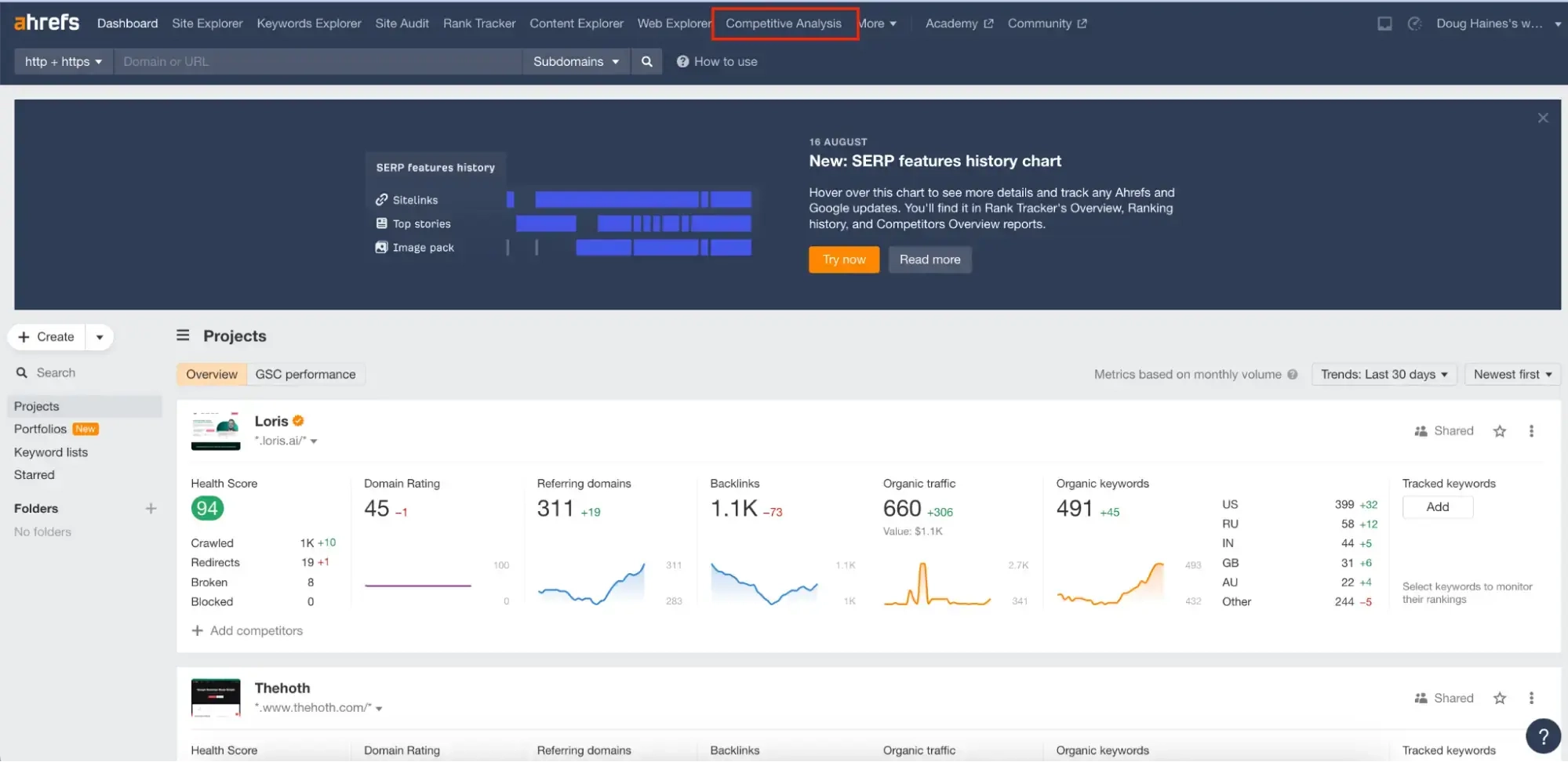
Ahrefs’s competitive analysis tool compares the backlink profiles of multiple websites (usually your competitors) to identify domains that link to them but not to your site. This gives you a list of sites that are likely to be interested in content similar to what you offer.
To perform an analysis, click ‘Competitive Analysis’ on the navigation bar:
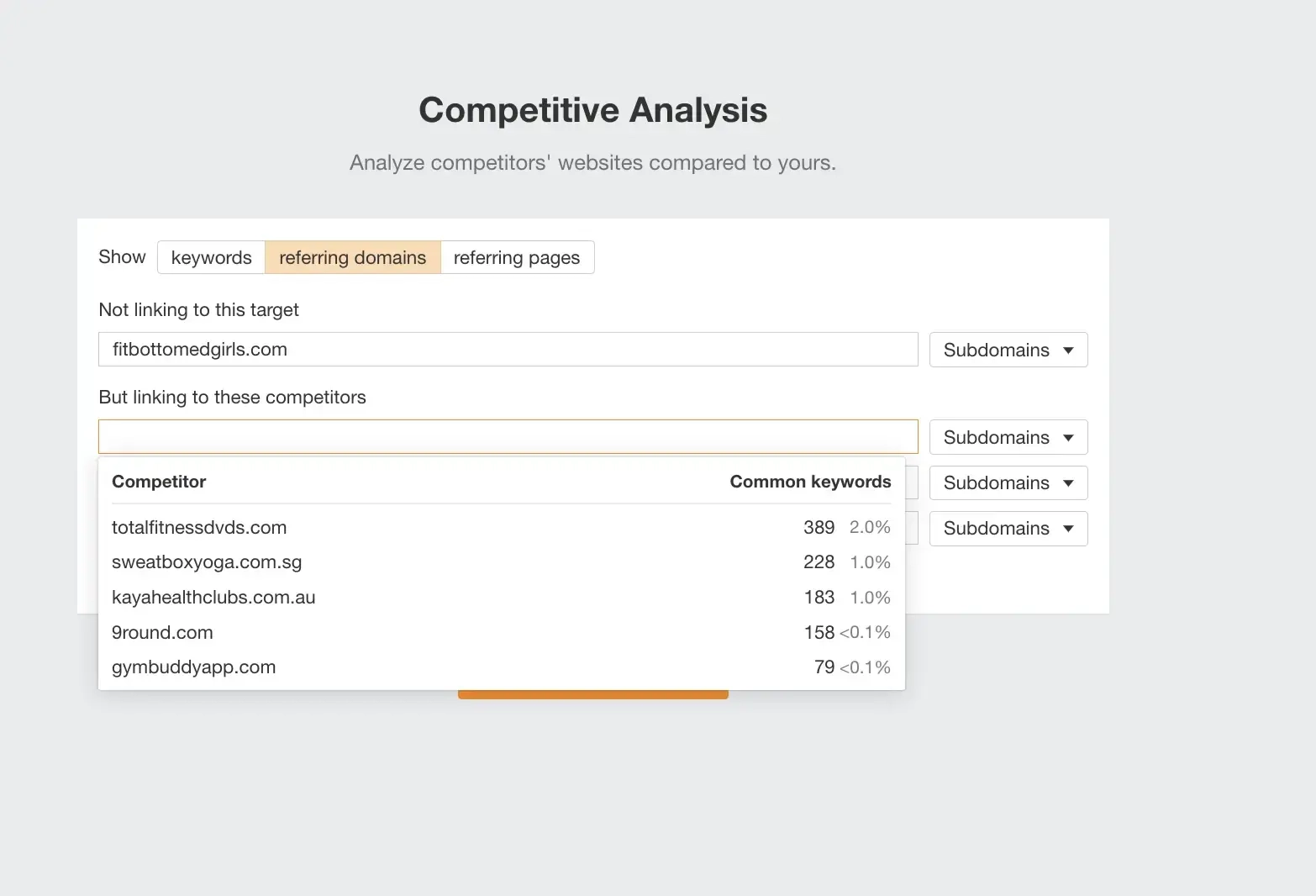
Let’s imagine you own an e-commerce business that sells fitness equipment online.
Click on ‘referring domains’ in the top tab. Then, type in your website URL. If you know who your competitors are, you can add their URLs, too. Otherwise, you can select your top competitors from Ahrefs’ suggestions:
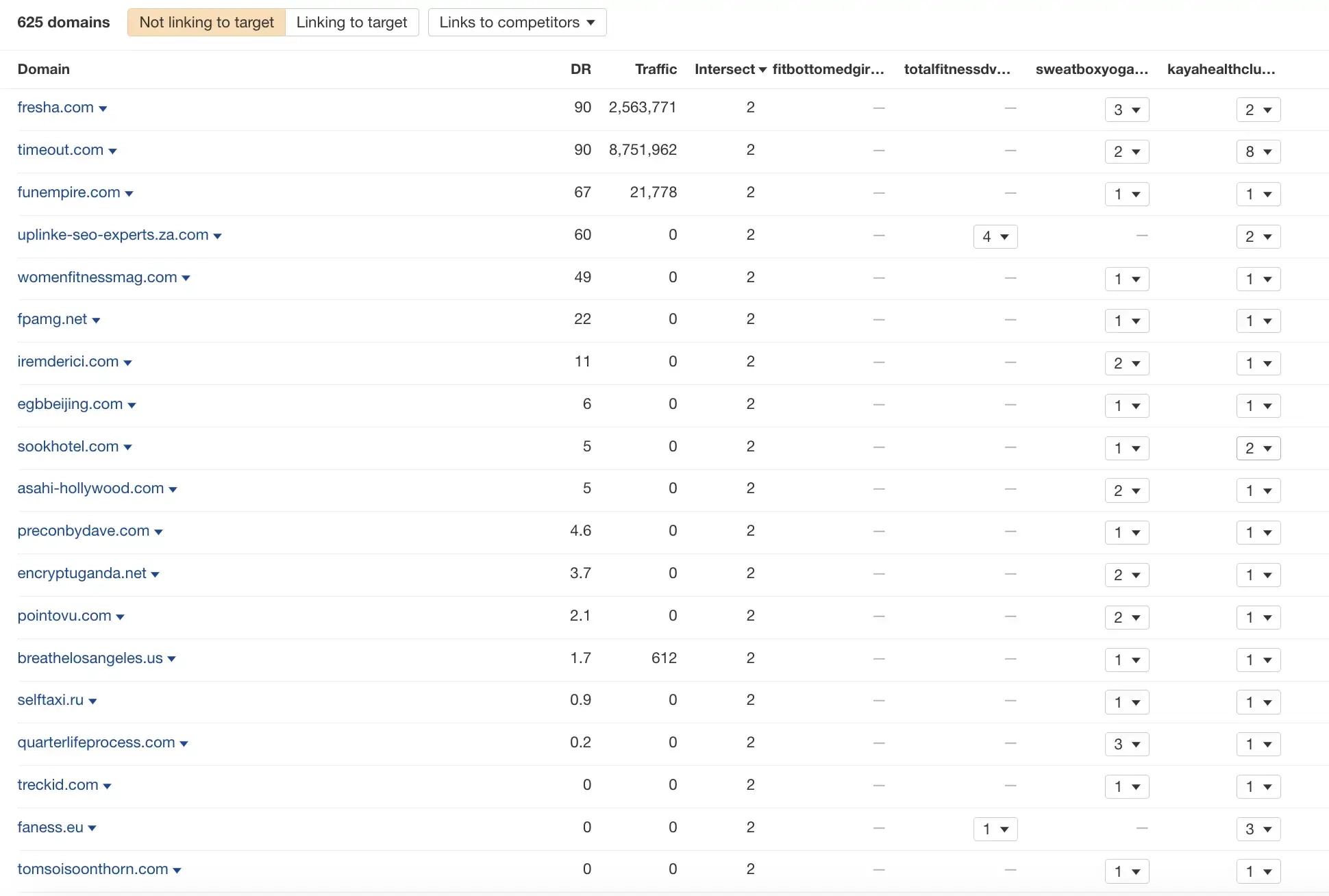
Now you can see all the websites that link to your competitors but not to yours. These websites are great targets for your niche link-building efforts:
3) Real editorial control
Look for signs that the site is actively managed: regular publication cadence, updated content, an identifiable editorial voice. Sites with real editorial control are the ones that provide real SEO value.
We suggest dividing your content into different categories to streamline the outreach process. If you sell fitness equipment, your content categories might look something like this:
👍 Educational content
These could be guides, how-tos, or in-depth articles on fitness topics or equipment.
Here is a good example of educational content that is linkable content because it provides value to the reader and is well positioned as a linkable resource:

👍 Product pages
These could be high-value product pages that offer detailed descriptions, user reviews, and strong calls to action.
Below is a product page that displays good content that website owners or bloggers may be interested in linking to:

👍 Resource lists
Resource page niche edits are curated lists of fitness tools, apps, or equipment you sell, such as “Essential Gear for Home Workouts.”
Here’s a resource page on the best gym equipment for creating a home gym:

4) Evaluating historical patterns
Review the existing outbound links on a target site and check the pages where your link would be inserted. If a page already links out to dozens of unrelated sites, or if the site appears to be monetizing links at scale, that is a signal to walk away. Understanding what constitutes white hat link building versus manipulative practices will sharpen your judgment here.
If you want a professional team to handle publisher vetting and placement on your behalf, take a look at how we work at LinkBuilder.io and review our pricing options.
Supporting AI Visibility with Niche Edits
The role of niche edits has expanded in 2026 beyond traditional search rankings. As AI-powered tools like Google AI Overviews, ChatGPT, and Perplexity reshape how users consume information, contextual backlinks have taken on additional strategic value.
How contextual content appears in training and retrieval datasets. AI systems learn from patterns of citation across the web. When your brand or content appears consistently within relevant, high-quality articles, it becomes part of the contextual record that AI models draw from when generating responses. This is one of the core ideas behind why links still matter in the age of AI search.
Strengthening entity clarity. AI systems reason about entities: brands, people, products, topics. Every contextual mention of your brand within a relevant article strengthens the association between your entity and a given topic area. Niche edit backlinks placed in topically relevant content contribute to this entity-building process in a way that isolated or irrelevant links cannot.
Increasing the likelihood of citation by AI systems. AI Overviews and generative search tools tend to draw from sources with established authority and consistent topical coverage. A site that is frequently cited in your niche is more likely to be drawn upon when AI systems generate answers on related topics. Building a network of niche edit backlinks from these authoritative sources puts your content in the right neighborhood. Our deeper guide on AI search optimization covers the broader strategy here.
Conclusion
Niche edits remain one of the most powerful and efficient tactics in a well-rounded link building strategy. They offer the speed advantages of placement into existing content, the SEO benefits of contextual relevance and inherited authority, and an increasing role in AI visibility as search continues to evolve.
The key distinction between campaigns that deliver results and those that fall flat is not the tactic itself but the quality of execution. Aged content, topical alignment, clean publisher profiles, and genuine editorial oversight separate placements that move rankings from those that waste budget or introduce risk.
If you want to explore what a professionally managed niche edit campaign could look like for your site, view our link building packages or get in touch with our team to request a free proposal.