

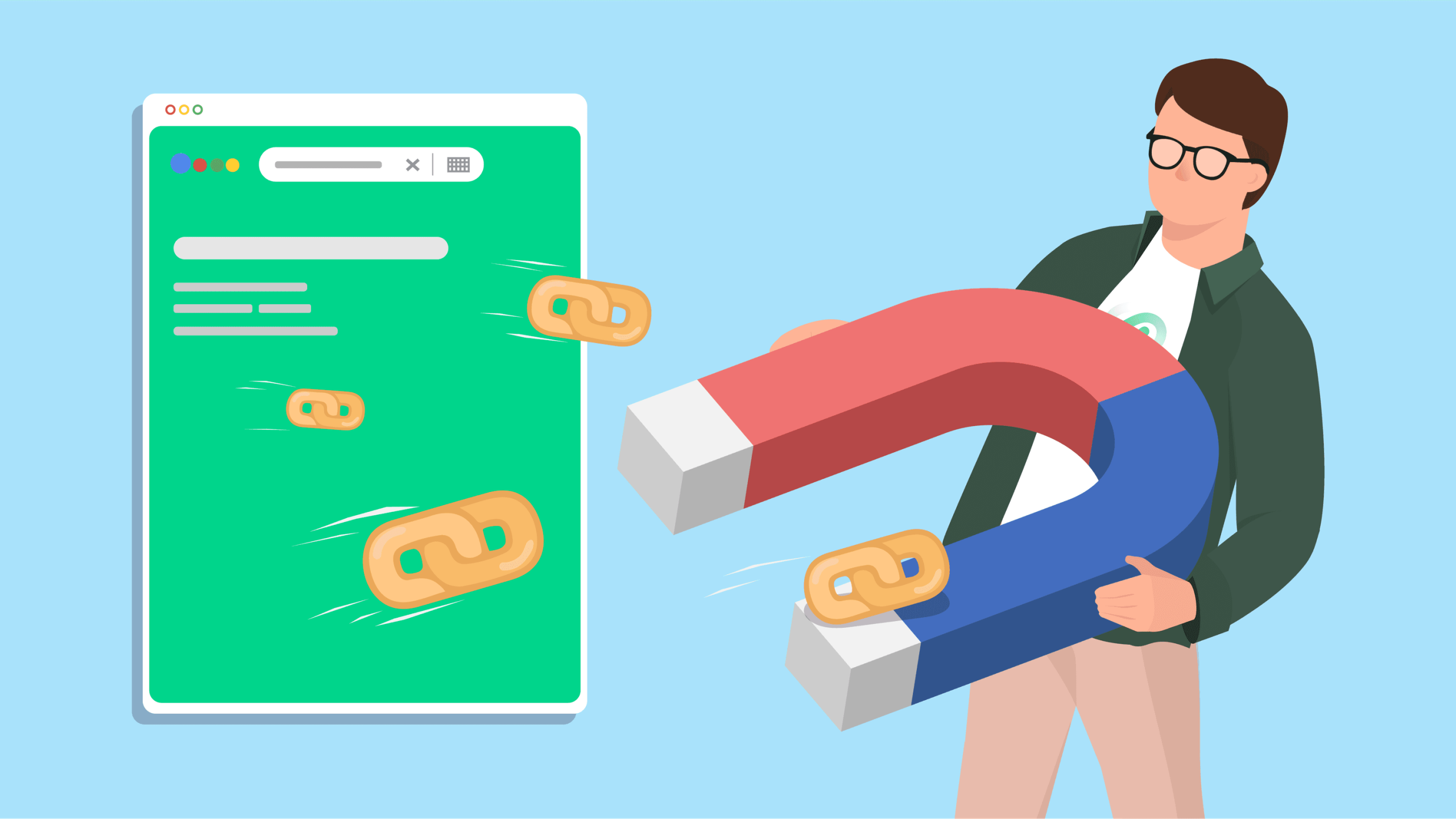
Backlinks are one of the most powerful SEO ranking factors and have the power to boost your website’s organic traffic. They are one of the most important tricks an SEO specialist has up their sleeve.
Backlinks can sometimes be known by other names, such as:
-
Inbound links.
-
Incoming links.
-
One-way links.
But whatever you call them, they’re indispensable tools for helping your business make an impact online.
Along with increasing organic traffic, a comprehensive link building strategy can increase your domain authority. Having a high domain authority builds trust with Google because it shows that your website is credible, which means your site may rank higher on search engine results. In turn, this can lead to even more organic traffic and ultimately, conversions.
What Is Domain Authority?
Domain authority is a ranking score that indicates a website’s relevance to a specific subject matter.
Developed by Moz, an all-in-one SEO software suite, this widely-used metric accurately indicates how likely a website is to have a high ranking in search engine results.
If you’re new to the world of SEO, starting a link building campaign that utilizes powerful backlinks may feel daunting. That’s what we’re here for!
As one of the world’s leading link building services, we’ve identified some specific traits that quality backlinks share.
Using this information, you can build backlinks that help your business rank higher in search engine results.
Are you ready to take your SEO strategy to the next level?
In this blog, we’ll outline why a powerful backlink campaign is so essential, the critical qualities of powerful backlinks, and how you can begin building your effective campaign.
Why You Should Focus on Building Powerful Backlinks
Before we get into our results-proven link building strategies, it’s essential to have a comprehensive overview of what backlinks are and how building links can benefit your business.
Simply put, backlinks are links from one website page leading to another. For example, say your business has a website offering gardening services in your area. You might upload a blog entitled 10 Things Beginner Gardeners Need to Know.
If your blog is high-quality and informative, another website might backlink to your blog. And there you have it, the first step of your link building!

Having a high volume of powerful backlinks (also known as quality backlinks) to your website or specific blog posts is essentially a “vote of confidence” in your website’s content.
Google and other search engines will see these “votes,” recognize that your content is credible, high-quality, and useful, and then push your website further up in their search results.
Naturally, the more quality links you have, the more powerful your link building campaigns will be, and the higher your website will appear in search engine rankings.
Link building is a continuous effort, and you or your SEO specialist should consistently optimize your website for keyword rankings, external links, and link building opportunities.
A comprehensive link building plan is a crucial part of SEO, and there are some tried-and-true methods you can use.

But before we get into these powerful link building strategies, it’s essential to understand what makes a powerful backlink, and how they’re differentiated from low-quality backlinks.
The Three Qualities of Powerful Backlinks
While link building might sound straightforward, not all backlinks are created equal.
If your link building is focused on quantity over quality, it may not deliver the stellar results you expect.
So, what’s the difference between high-quality links and low-quality links?
1) Powerful Backlinks Come From Relevant, Quality Websites
Just like you would be more likely to take advice from a credible, reliable website, so would search engines!
Getting backlinks from top-quality, high-traffic websites can do wonders to boost your website’s rankings.

Search engines employ a range of metrics to determine whether your link profile is made up of quality links.
Your Website’s Link Profile
A link profile is the makeup of inbound links that point to your site. Search engines like Google favor links from diverse sources, and consider the domain authority of these websites.
In order to prevent websites from employing unscrupulous practices to bolster their link building, search engines look at a variety of additional factors when creating your link profile. These include:
-
The kinds of links that point to your website.
-
The anchor text of those links.
-
The way those links were acquired.
Some of the metrics search engines use to determine your link profile include:
Domain authority (DA)
Domain authority indicates that a website’s writers are experts in their area. Using metrics such as their domain score and how many links a page has, search engines can determine how credible a website is.
If you receive high-quality backlinks from websites that have a high domain authority score, your own website domain authority score is likely to increase.

Spam score
Generally, a spam score of up to 5% is considered acceptable by Google, but anything above that could see the website penalized.
These penalties include:
-
Keyword-level penalties that lower the ranking of keywords used.
-
URL penalties that lower the ranking for a specific URL.
-
Sitewide penalties drop the ranking of a number of keywords and pages on your site.
-
A delisting penalty removes your website from Google’s domain. This is the strongest penalty and will result in your site being removed from Google search results.
Some of the factors search engines look at when determining spam scores include:
-
Large websites with few links: This indicates that these pages are not receiving backlinks, showing search engines that they are not helpful, not useful, or feature low-quality content.
-
Low link diversity: If a page receives backlinks from a small pool of websites, this indicates low link diversity and increases the website’s spam score.
-
Too few website pages: You don’t need to create hundreds of pages just for the sake of them, but having too few pages may indicate that your website is thin on content.
If you get a backlink from a spammy website, it’s not the end of the world—most websites have a mixture of high-quality and low-quality links, but it’s important that the good quality outweighs the bad!

Google index status
Google uses the Google Crawler algorithm to scan over various components of your website to ensure that they’re optimized for search.
Some of these components include:
-
Your title tag.
-
H1 tag.
-
Meta descriptions.
-
Alt tag.
-
Internal linking.
-
Keyword rankings.
-
Anchor text.
2. They Are Usually Dofollow Links
It’s important to remember that there are two different ways that websites can link to one another—through dofollow backlinks or nofollow links.
What Is the Difference Between Dofollow Links and Nofollow Links?
Here’s how these types of backlinks differ:
-
Dofollow backlink: When a website gives another website a dofollow backlink, it tells Google (and other search engines) that it endorses the website as a quality resource for a particular topic.
- Nofollow link: A nofollow tag means that a website does not endorse the credibility of the website they are linking to. A nofollow tag usually does not help improve your SEO ranking.
Quality backlinks are generally only useful if they are dofollow links because this is the only way they can pass along their domain authority.
Your link building plan should be focused on getting as many dofollow links from high-traffic, high-authority websites as possible.
3. They Don’t Come From Spammy Websites
Just as being linked to a credible website can improve your search engine rankings, receiving a toxic backlink from a spammy website can hurt your ranking on Google.
Toxic Backlinks
If you receive a backlink from a low-quality site, this may negatively impact your website’s performance on search engine results. Not all toxic backlinks will affect your website, but having a high volume is likely to.
You can avoid this by not using spammy SEO services, asking the website to remove your link, or by using the disavow tool on the Google Search Console to advise the search engine to ignore the links (which it may or may not do).
7 Ways to Build Powerful Link Building Campaigns
1) Create high-quality content
Creating high-quality content doesn’t guarantee that people will find your website.
But, on the flip side, creating poor-quality content guarantees that credible websites won’t want to link to your website.
Good content engages and informs your audience, but how do you know whether your content is high-quality?

Here are some tips:
-
All information should be accurate and from credible sources.
-
Your content should be original.
-
Your content should be fresh and relevant to current news or events.
-
Your content should be optimized for SEO.
Creating quality content is vital to your link building strategy because it encourages other high-quality websites to link to your website.
This increases your visibility in search results and boosts organic traffic.
2) List your website in round-ups
Link round-ups are weekly or monthly summaries of top links that websites share.
Getting your links onto these lists should be a crucial part of your link building plan, as it guarantees they will be shared on other websites.
Also, having your links listed in round-ups can help you increase your organic traffic.
But how do you find round-ups for link building?
Here are some of the resources you can use:
-
Search Twitter for your keyword “+ link round-up.”
-
Search Google for your keyword “+ link round-up.”
-
Check whether your favorite niche websites and industry blogs do link round-ups and send them an email.
3) Do guest posts
Guest posting is one of the fastest and most effective ways to harness the power of link building.

It entails publishing articles on other websites, which exposes your brand to more consumers, helps you generate organic traffic, and enables you to build backlinks.
There are multiple ways to find websites that accept guest posts.
Here are some of the best ways:
-
Search your keyword “+ guest posting” on Google.
-
Search “guest posting” on Twitter.
-
Cold email relevant websites are asking whether they accept guest posts.
4) Target websites that give backlinks to your competitors
If your competitors rank at the top of search engine results, they likely have a good backlink profile.
This means that they have backlinks from a diverse range of high-quality websites.
If websites are willing to link to your competitor, they’d likely be willing to link to your website too.
You can try to leverage some of these links yourself. Tools such as Moz or Ahrefs allow you to see which websites your competitors receive backlinks from. Once you know this, you can email them and propose they link to your content.

5) Use the skyscraper method
The skyscraper technique was created in 2015 by SEO guru Brian Dean.
It’s a powerful tool for increasing dofollow backlinks and organic traffic and streamlining your content creation process.
Here’s how to use it:
-
Find a high-quality piece of content with a lot of backlinks.
-
Use that content as a guideline to create something better (and original). Remember to make a note of all the links in the piece!
-
Contact those linked to the original piece and ask them to consider linking to your piece instead.
6) HARO
HARO (“Help a Reporter Out”) is a service where businesses can earn links from reputable domains.
How does it work? Journalists and bloggers put up briefs seeking subject matter experts for pieces they’re writing. The platform allows copywriters to “pitch” to the journalist, and they can choose which one to work with.

The result is a win-win outcome where the journalist can create a well-researched piece, and the business gets a backlink from a credible website.
7) Turn brand mentions into backlinks
If another website has mentioned your brand, they may have neglected to link to your website in their content.
This presents an opportunity to reach out to them and ask them if they will consider linking to your website in their mention.
You should use a media monitoring tool, such as Meltwater, that notifies you whenever your brand is mentioned. You should also monitor for keywords related to your brand.
For example, a brand such as Volkswagen might have notifications turned on for:
-
Volkswagen.
-
Golf GTI.
-
Passat.
-
T-Roc.
-
Tiguan.
-
Tourag.
This way, every time one of their products is mentioned, they will be notified and have the opportunity to ask for a backlink.
Are You Ready to Take Your Link Building to the Next Level?
Since our launch in 2016, we have helped drive countless businesses to the front page of search results.
As one of the most trusted link building agencies in the world, we create powerful strategies underpinned by years of expertise, A/B testing, and big data to help you create a link building campaign that boosts business.
If you’re ready to start getting your business the online attention it deserves, contact us today for more information on our services and pricing!
Quality is never an accident; it is always the result of intelligent effort.

Stewart
Co-Founder